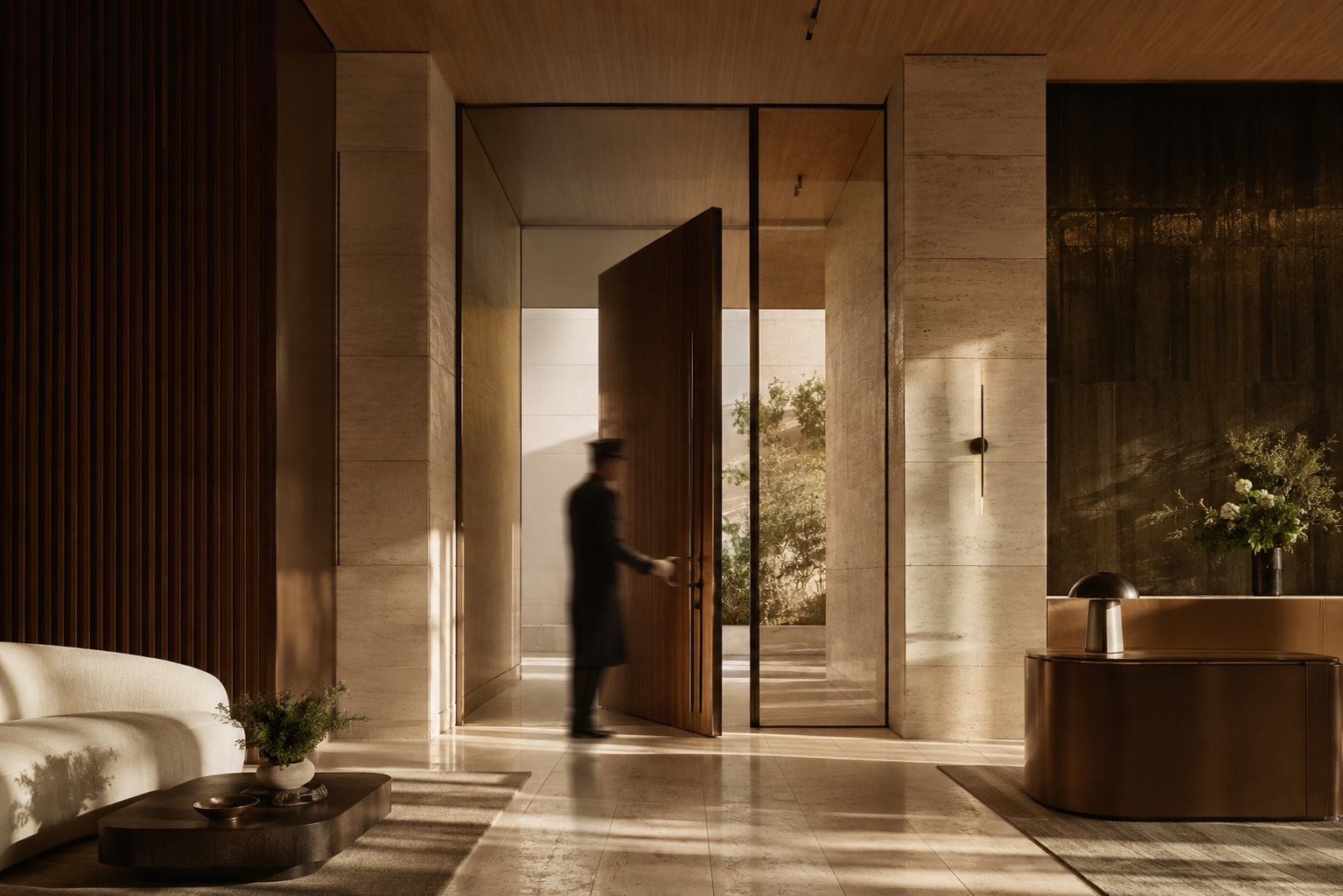
Hospitality and concierge work share a word — guest — and not much else. A hotel guest is staying for a night, perhaps a fortnight. A residential guest is the resident: they live behind the door you watch every day, and they will see you across two thousand shifts.
That changes what good service looks like.
In hospitality, the unit of experience is the moment. The check-in greeting, the turn-down, the recommendation that turns into a story. Each one is a chance to deliver something a guest will remember and tell a friend about. The work is theatre, in the best sense.
In a residential building, the unit of experience is the routine. Residents do not want a story about the lobby — they want the lobby to be a place they walk through without thinking. They want the lift to be ready, the parcel to be there, the door held without being asked, the name remembered, the small request remembered, the awkward question never raised.
The wow moments are rarer. The cost of a missed routine is higher. A surprise turn-down by housekeeping is welcome; a surprise from the front desk is not.
So we train concierges differently. Less emphasis on the script for the dazzling first encounter, more on the predictable feel of the hundredth one. Knowing the names. Knowing which floor the parcels for 14-C go to without checking. Knowing that a resident’s daughter visits on Sundays and that her car is the navy hatchback in bay 3. These are the things that, taken together, mean a building feels well looked after.
A good concierge is not the protagonist of the building. A good concierge is the part you stop noticing — the assurance that the routine will hold.
It is harder work than it looks. It rewards patience over flair. It is the model we have built the practice on, and it is the model we will keep training the teams on for the buildings ahead.