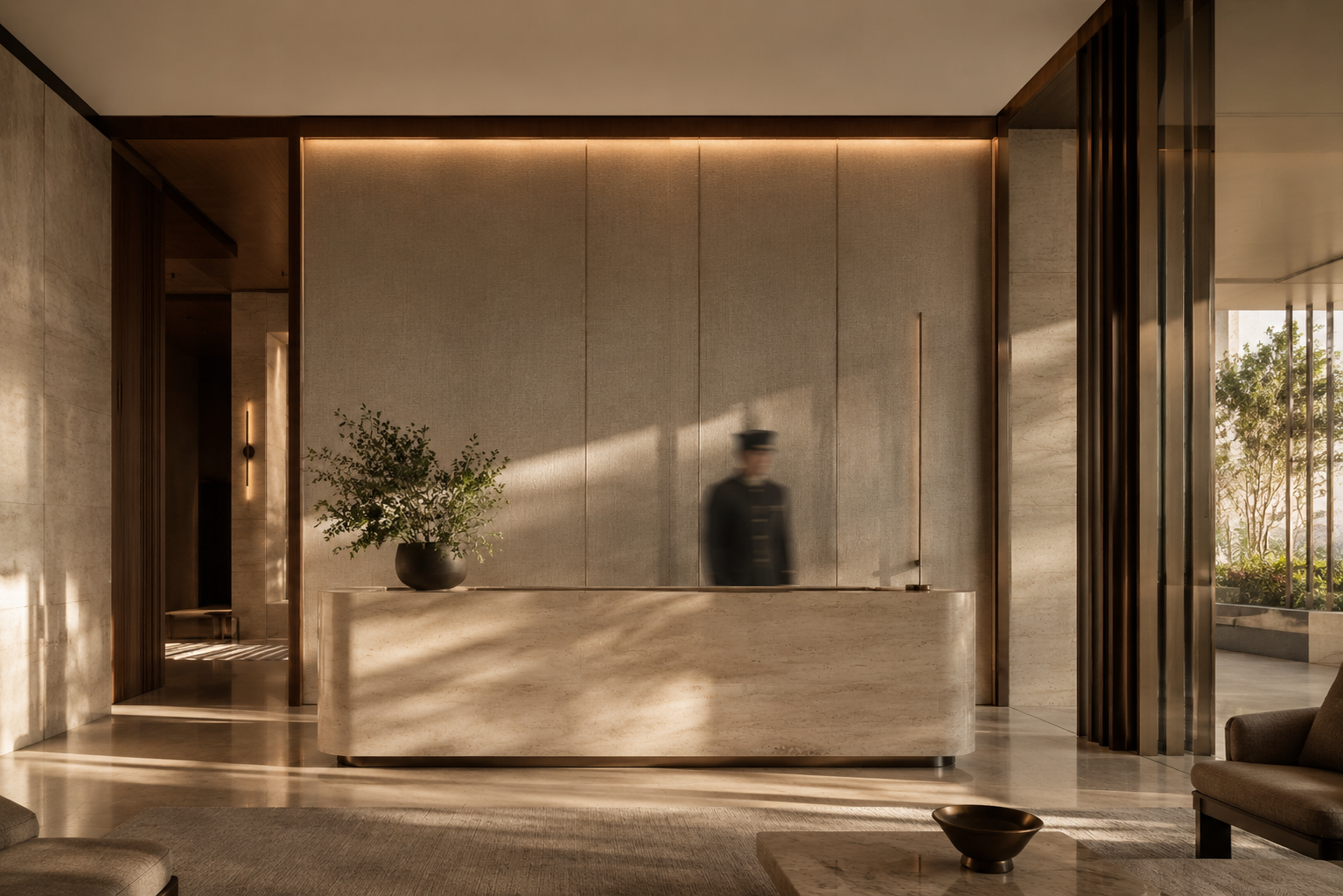
The desk is the first thing a resident passes in the morning and the last one they pass at night. It is also where most of a building’s information lives — who came in, who left, what was delivered, who asked after whom. The team behind the desk is, in a real sense, the keeper of that information.
We brief concierges on three rules that sound obvious until they are tested in the field.
Confirm before you connect. A visitor arrives asking for a resident by name. The instinctive response is to phone the resident and pass them through. The disciplined response is to confirm, on the call, that the visitor is who they say they are — and to give the resident the name without volunteering anything else. The resident decides whether to come down. The visitor is never told whether the resident is home, in town, or expecting them.
Release on the receipt, not the resemblance. A courier hands over a package addressed to apartment 7-B. The face is familiar; the building is small. The release happens against a signed receipt and a record in the parcel log — not against memory. Couriers change. Signatures and timestamps do not.
The hallway is not a corridor. A neighbour asks, in passing, whether so-and-so is up at the desk often, whether their guests are loud, whether the door is opened during the day. The concierge replies the way the concierge replies to every other casual question about another resident — with a smile and nothing.
None of this is dramatic. It is the daily texture of a quietly run building, and it is the part of the job residents notice only when it lapses.
The teams who hold the desk for our buildings are trained for this from the first day. We came to building staffing from a luxury-retail background, where the same discipline applies on the floor — what a client is wearing, what they ask after, what they bought last visit, stays inside the boutique. The same principle works for the lobby.
Quiet, exact, every shift.